How rising expectations are reshaping the role of accountants and bookkeepers.

Not long ago most clients were satisfied with accurate books and a clean close, but that expectation has changed.
As 2026 approaches, businesses are no longer looking to their accountant only to confirm what already happened. They want visibility as things unfold, early warnings when something looks off, and advice they can act on before small issues become big ones.
This shift is not about clients demanding more for the sake of it, but is reflective of how modern businesses now operate.
Today’s business owners live in a world of real-time information. Bank balances update instantly. Sales dashboards refresh throughout the day. Payroll, inventory, and expenses are visible with a few clicks.
When financial insight arrives weeks later, it feels disconnected from reality. Clients are asking practical, forward-looking questions:
👉 “How are we tracking right now?”
👉 “Why did margins change this month?”
👉 “Is cash flow going to be an issue next quarter?”
They are not questioning their accountant’s expertise. They are looking for clarity and confidence in a fast-moving environment.
Reports matter. Compliance matters. A clean close matters. But on their own, they no longer define value. By the time many reports are delivered, clients have already moved on.
The numbers may be right, but they are backward-looking. What clients want is help understanding what the numbers are telling them now, and what actions they should consider next.
In 2026, value looks like:
Accountants who deliver this are seen as trusted partners, and those who don’t risk being seen as reactive.
When accountants surface issues early, client conversations shift. Instead of explaining what went wrong, you discuss options. Instead of reacting to problems, you help clients avoid them.
Over time, this builds a very different kind of relationship. Clients feel supported and informed. They can then begin to rely on their accountant not just for accuracy, but for their highly-valuable perspective. Once established, that trust in their accountant is hard to replace.
Most accountants already know how to advise clients well but the challenge is finding the time and headspace to do it consistently.
Manual close work, reconciliations, checks, and reviews still consume a significant portion of each month and by the time the books are finished, there is often little energy left for deeper analysis or proactive conversations.
This is why advisory often feels aspirational rather than operational. It is not a lack of skill in the team, but the lack of timely information and team's capacity.
To meet rising client expectations, firms need workflows that surface insight without adding more work.
When client data is connected in real time and issues are flagged as they emerge, the accountant’s role naturally shifts. Less time is spent searching for problems, and more time is spent understanding what’s actually happening.
Instead of pulling information together, accountants can focus on interpreting it and guiding clients throughout the period. That’s what makes highly-valuable, proactive advice not just possible, but practical.
Looking ahead, expectations will continue to rise. In 2026 and beyond, clients will increasingly expect:
✅ Faster, more predictable closes
✅ Clear explanations, not just reports
✅ Early warnings when something looks off
✅ Ongoing guidance, not just periodic updates
Firms that can meet these expectations will stand out - not because they are doing more work, but because their workflows support better insight and better client conversations.
Providing more value does not have to mean adding more complexity. When repetitive tasks are automated and insights surface naturally, firms gain the time and clarity needed to advise proactively.
Teams are able to stay focused and workloads remain manageable, resulting in increased client value grows without creating chaos. That balance is what modern accounting firms are working toward.
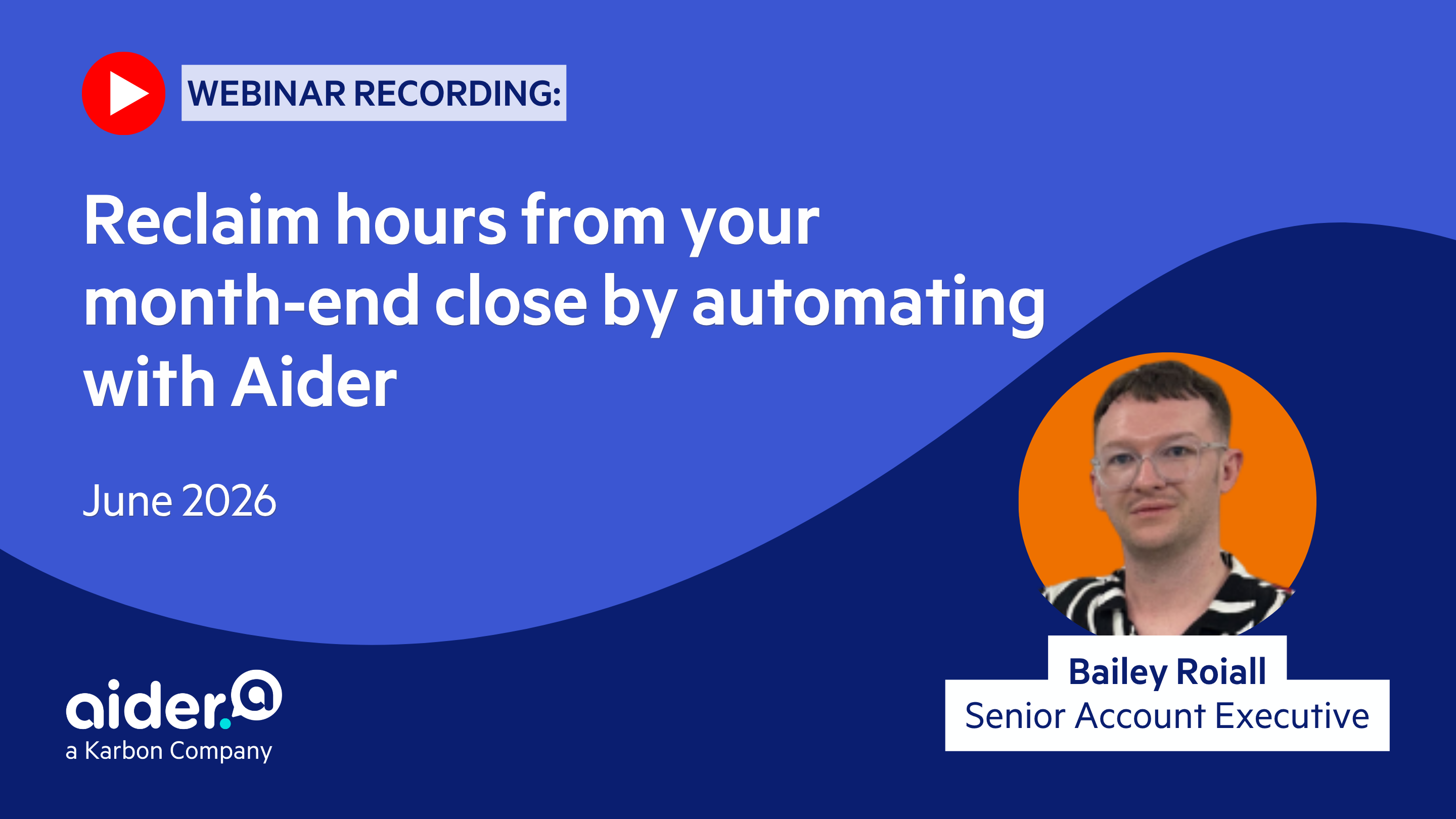
If you would like to see how accounting firms are using automation and real-time insight to deliver more proactive advice, Bailey would be happy to walk you through it.
Book in some time with Bailey from Aider to see how firms are closing faster, advising more proactively, and meeting rising client expectations without increasing workload.
.png)
.png)
.png)
.png)